When A Hospital Gets Acquired-What Happens to 40 Years Of Patient Medical History
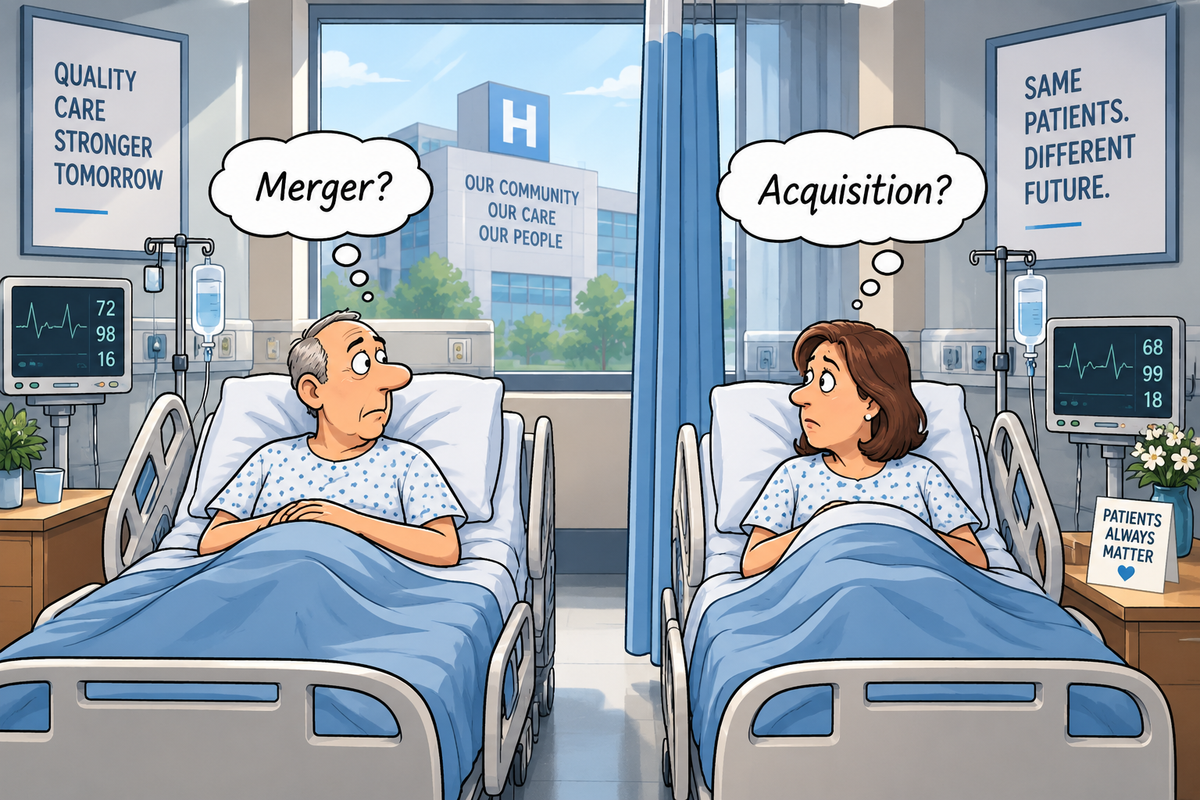
In 2026, 40 hospital mergers and acquisitions happened in the first six months alone.
Most patients had no idea their own hospital was being sold. Few questioned where their medical records after went the deal was closed.
When hospital acquisitions are announced, we usually hear about the usual leadership changes, staffing cuts, and new building names. The patient data question rarely quite makes the story.
It should.
Hospital mergers hit a 15 year low in 2025 with just 46 deals.
But In the first six months of 2026 alone there were already 40, putting 2026 on pace to nearly double last year's total. More than two thirds of community hospitals are now affiliated with a larger health system.
This acceleration isn't accidental. COVID exposed the financial fragility of the independent hospital.
AI infrastructure costs are now enormous, high turnover staffing expenses, healthcare insurance denial rates are squeezing the revenue of smaller systems hardest.
Private equity has entered the building, acquiring distressed hospitals at a discount, extracting margin, and selling off.
The community hospital isn't disappearing because healthcare got better organized. It's disappearing because the economics of staying independent are becoming more difficult every year.
The Data Asset Nobody Talks About
When a hospital is acquired, the buyer isn't just taking over buildings, equipment and employees. It is also inheriting something accumulated over decades: the medical histories of thousands, sometimes millions, of patients.
Patient medical records typically transfer to the new owner as a business asset, along with the hospital itself. Patients generally aren't asked for consent when their medical records transfer as part of a hospital sale.
The records are necessary for the acquiring organization to continue treating patients, and operating the hospital on a business level. HIPAA allows this transfer.
A hospital sale, merger or acquisition can qualify as a healthcare operation, allowing patient records to transfer. The acquiring organization may have completely different privacy practices, technology vendors and policies governing how patient information is stored, accessed and shared.
The EHR Migration Problem
Post acquisition, a hospital might switch electronic health record systems, forcing years of patient data to be migrated from one platform to another.
This is a complicated process where information can be lost, duplicated, misplaced or become harder for clinicians to find.
Eighty three percent of data migration projects fail or exceed their budgets according to Gartner, a leading technology research firm.
This could lead to issues including medication histories getting lost and allergy information that fails to transfer. Physicians inherit incomplete records and make clinical decisions based on them.
One AI In. Another AI Out
There's a bit of irony worth mentioning here. AI documentation tools are partly responsible for the inconsistencies that make EHR migrations so difficult in the first place.
Mistakes like hallucinated exam findings, omitted medications, and errors in clinical notes. Now the healthcare industry is positioning AI to fix all of the errors in patient data before and after the migrations.
One AI creates the mess and another is sold to clean everything up.
The clinicians are responsible for everything in between.
The Window Nobody Warns You About
Most patients would assume the biggest risk to their medical records is a cyber-attack on a normally functioning hospital. But data suggests that hospitals are most vulnerable during the transition itself.
University of Texas Dallas research found that data breach probability doubles in the two year window surrounding a hospital merger, from 3% to 6%
In August 2023 a ransomware attack hit Prospect Medical Holdings, three Connecticut hospitals that Yale New Haven Health had agreed to purchase for $435 million.
The cyber-attack disabled operations across Prospect's facilities nationwide. Yale New Haven asked for a price reduction, sought $80 million in state funding, filed lawsuits, and eventually just walked away from the deal, paying 45 million dollars to end the legal process.
Two hospitals closed as a result of a cyber-attacks from vulnerable systems fresh off a merger and acquisition.
The Worst Case Scenario For Patients
When stolen patient information is used for medical identity theft the victim loses control over the medical record. The fraudster gains access to care or drugs they were never entitled to.
Stolen medical data gets used for identity theft the fraudster's health history merges with the victim's permanent record.
Suddenly their records show treatments never received, prescriptions never filled and claims never submitted start appearing in their name.
The average victim spends $13,500 and more than 200 hours trying to untangle them.
The Notification Nobody Sends
When a hospital’s ownership changes hands patients should receive hard mail documentation explaining what happens to their personal records, who owns the data and if privacy rules have changed.
They should be given the option to request a complete copy of their medical records before any systematic changes start.
None of this is currently required. A simple letter explaining who now owns your records and what has changed would go a long way.
What Patients Can Do Right Now
In the meantime patients aren't entirely without options. Medical records legally belong to the patients. Pre or post acquisition. They can ask the provider directly whether the hospital has changed ownership and what EHR system is being used.
Requesting a complete copy of your medical records before any transition begins is the single most protective step a patient can take.
Healthcare's Consolidation Is Just Starting
Healthcare consolidation is accelerating and it isn't slowing down anytime soon. The independent community hospital is quietly becoming a relic.
In fact, two thirds of community hospitals are now system affiliated according to the American Hospital Association's 2026 Fast Facts report.
Community Hospitals’ quiet disappearance is one of the least discussed transformations in American healthcare.
It moves quietly along with all the medical history within it. That's not a prediction.
For most Americans it's already happened.
Comments ()